
Operations for PE Portfolio Companies: Advisers Recommend, We Run It
By Paul Ruddy · August 21, 2026
Operations for PE portfolio companies is where most value-creation plans quietly stall. The diligence is sharp, the thesis is clear, and the 100-day plan reads well. Then the adviser presents the deck, the operating partner is stretched across eight boards, and the actual doing lands on a management team that was already at capacity. The recommendations were never the hard part. Running them, inside a company that has no documented process and data spread across five systems, is the hard part, and it is the part almost nobody is contracted to own.
Advisers recommend, execution not advisory is the gap
The market for portfolio operations is crowded with advice and thin on execution. Consultancies produce a diagnostic and a roadmap and hand it to a team with no capacity to build. Point solutions install a tool and leave the integration and the process redesign for someone else. The seam between recommendation and result is exactly where the return leaks out. What a portfolio company needs is not another set of slides. It needs the operations run, the foundation built, the integrations shipped, and someone accountable for whether the number moved.
That takes four capabilities under one roof: operations redesign, technology, data engineering, and software. Most firms hold one of the four. Stitch four vendors together across a holding and the work falls into the gaps between them, which is the last thing an operating partner has time to referee. A single senior team accountable across all four closes the seam by removing it.
The value-creation deck is not the hard part. Running it inside a company with no documented process is the hard part, and that is the part we own.
A 100-day plan runs on a foundation, not a wish
A 100-day plan that opens with automation and AI is a plan that will miss. The sequence has to be process first, automation second, AI last, because you cannot automate a process you never wrote down. Before anything is built we score the operating layer from one to five across five dimensions: process maturity, technology and integration, data quality, automation and AI readiness, and people and knowledge risk. Those scores tell the operating partner, in numbers, what this holding can actually absorb in the first hundred days versus what has to wait for the foundation.
The scores also set a ceiling. The AI Horizon, how far intelligent automation can take a business, caps at 2.5 out of 5 for any company without documented process. For a portfolio, that is a due-diligence signal as much as a build plan: a target with a low floor on process and data has a low ceiling on the very automation the thesis may be counting on. Raising the floor is the work that raises the ceiling, and it is where the first hundred days should go.
Build the operating capability once, replicate it across the portfolio
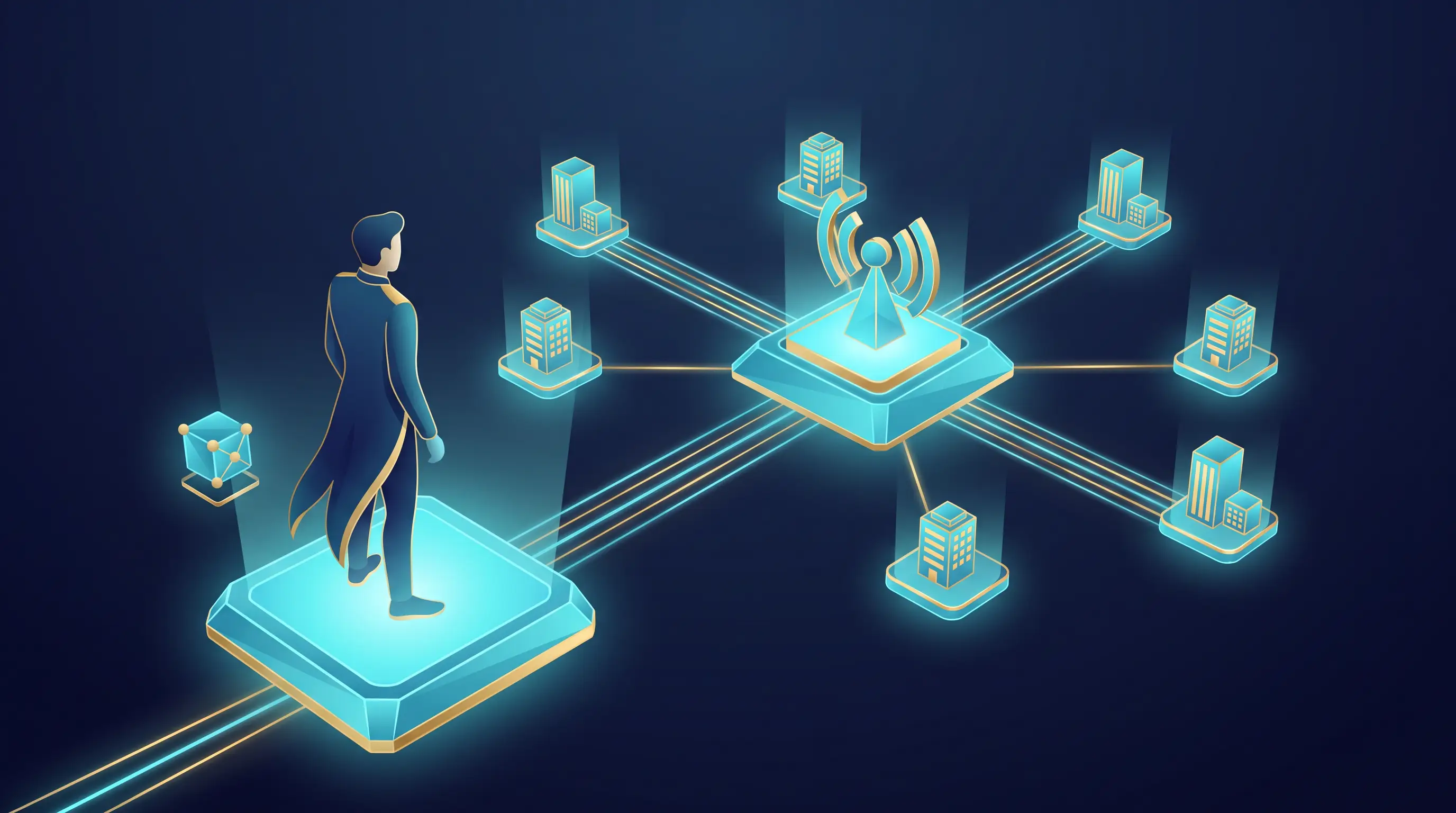
The economics of portfolio company value creation change when the operating capability is built once and reused. A data model, an integration pattern, a reporting layer, and a set of automations proven at one holding become a template for the next, adapted to each company rather than rebuilt from zero. The doctrine stays foundation-first per holding, because no two portfolio companies start from the same place, but the machinery that builds the foundation is shared. The second holding is faster than the first. The fifth is faster still.
That is the difference between buying advice per company and building an operating capability across the book. Advice does not compound. A replicable operating layer does, and it gives the fund a consistent way to see and lift every holding rather than a folder of one-off decks.
How the work is delivered and measured
The delivery motion is three moves in a fixed order: audit how the holding actually operates, then design and build the foundation and the value-creation initiatives on top of it, then monitor and optimize on a cadence with a standing delivery review. Every initiative is tied to a business outcome, whether automation increased, whether margin improved, whether the company scaled without adding proportional headcount, and reviewed on that cadence so the plan stays honest after close. Crawl, walk, run, starting where the biggest issue is, not boiling the ocean.
The honest first step is small. The Opportunity Engine is a roughly fifteen-minute assessment that returns a custom report on where a holding sits on the maturity scale, its single biggest problem, and how the rest of the work maps to the other gaps. Run it per company and the fund gets a comparable read across the portfolio. None of it is glamorous. All of it compounds.
Operations & Scaling FAQ
Questions operators ask.
Answers to common questions on this topic.
How is this different from a management consultancy's value-creation work?
A consultancy typically delivers a diagnostic and a roadmap and hands it to a management team with no capacity to build. This is execution, not advisory: one senior team across operations, technology, data, and software that runs the plan, builds the foundation, ships the integrations, and stays accountable for whether the number moved. The deck is where most firms stop and where the real work starts.
How does building once and replicating across the portfolio actually work?
An operating layer proven at one holding, the data model, integration pattern, reporting, and automations, becomes a template adapted to the next holding rather than rebuilt from zero. The doctrine stays foundation-first per company because no two start from the same place, but the machinery is shared, so the second holding is faster than the first and value-creation work compounds across the book.
Where should a 100-day plan start in a low-maturity portfolio company?
With the foundation, not with automation. Scoring the operating layer from one to five across process, integration, data quality, automation readiness, and people risk shows what the holding can absorb in the first hundred days. The AI Horizon caps at 2.5 out of 5 without documented process, so the early days go to raising the floor on process and data, which is what raises the ceiling on everything after.
One vendor. Operations, technology, data, software.
Start with a measurement.
The Opportunity Engine scores your operating layer across five dimensions in about fifteen minutes, then names your biggest gap. No sales call to get the report.